
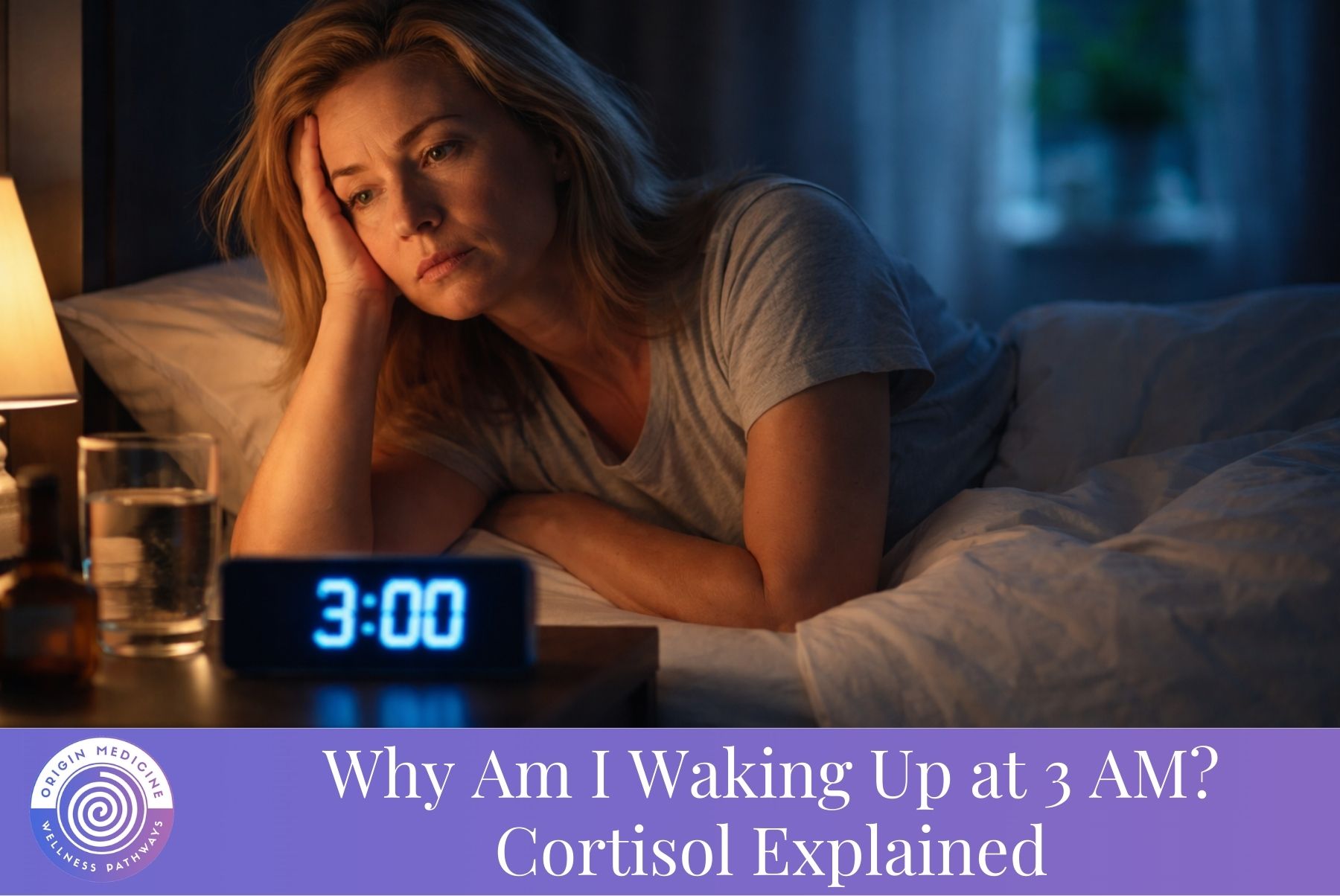
Waking up in the middle of the night—especially around 3 AM—can feel frustrating, confusing, and exhausting. Many women report falling asleep easily, only to wake suddenly with a racing mind or anxious feeling. If this sounds familiar, cortisol imbalance may be the missing piece.
At Origin Medicine, we frequently see women struggling with high cortisol symptoms, including disrupted sleep, fatigue, and hormone imbalance. Understanding how cortisol works—and how functional medicine addresses it—can be the first step toward better sleep and overall health.
What Is Cortisol?
Cortisol is often called the “stress hormone,” but that label doesn’t tell the full story. Cortisol is a vital hormone produced by the adrenal glands and plays an essential role in:
- Regulating your sleep–wake cycle
- Managing blood sugar levels
- Supporting metabolism
- Controlling inflammation
- Helping the body respond to stress
Under normal conditions, cortisol follows a predictable daily rhythm:
- Highest in the morning (to help you wake up)
- Gradually declines throughout the day
- Lowest at night, allowing restful sleep
When this rhythm is disrupted, sleep problems—especially early morning awakenings—can occur.
Why Does Cortisol Rise at Night?
For many women, cortisol levels become elevated at night, when they should be low. This is a common root cause of waking around 2–4AM.
Common reasons cortisol may rise at night include:
Chronic Stress
Ongoing emotional, physical, or mental stress keeps the body in a constant “fight-or-flight” state, signaling cortisol release even during sleep.
Blood Sugar Imbalances
Low blood sugar during the night can trigger a cortisol spike as the body attempts to stabilize glucose levels.
Hormonal Changes
Perimenopause, menopause, and estrogen imbalance can disrupt cortisol regulation, making high cortisol symptoms in women more common.
Poor Sleep Habits
Late-night screen use, inconsistent sleep schedules, or overexercising can interfere with the body’s cortisol rhythm.
Inflammation or Underlying Health Conditions
Gut dysfunction, chronic inflammation, and adrenal dysfunction can all contribute to abnormal cortisol patterns.
Common High Cortisol Symptoms in Women
Women with elevated cortisol—especially at night—often experience a combination of physical, emotional, and hormonal symptoms, including:
- Waking between 2–4AM and struggling to fall back asleep
- Feeling “wired but tired”
- Anxiety or racing thoughts at night
- Fatigue despite adequate sleep
- Weight gain, especially around the abdomen
- Irregular periods or worsening PMS
- Sugar or salt cravings
- Mood swings or irritability
- Brain fog and difficulty concentrating
These symptoms are often dismissed as “normal stress,” but they are signals your body is asking for support.
Functional Medicine Solutions for Cortisol Imbalance
At Origin Medicine, we take a functional medicine approach to cortisol imbalance—looking for root causes rather than masking symptoms.
Advanced Testing
We use comprehensive lab testing to evaluate:
- Cortisol patterns throughout the day
- Blood sugar regulation
- Hormone balance
- Nutrient deficiencies
- Inflammation and gut health
Personalized Treatment Plans
Based on your results, your plan may include:
- Targeted nutritional support
- Lifestyle and stress-management strategies
- Sleep optimization techniques
- Adaptogenic herbs or supplements
- Hormone-supportive therapies when appropriate
Whole-Body Focus
Because cortisol affects every system in the body, our approach supports sleep, hormones, metabolism, and mental health together, not in isolation.
Q&A: Cortisol, Sleep, and Women’s Health
Why do I wake up at 3AM specifically?
Around 2–4AM, your body is especially sensitive to cortisol changes. If cortisol rises when it should be low, it can trigger alertness and wakefulness.
Is waking up at night always caused by cortisol?
Not always, but cortisol imbalance is one of the most common causes—especially when paired with anxiety, fatigue, or hormonal symptoms.
Are high cortisol symptoms more common in women?
Yes. Hormonal shifts, caregiving roles, chronic stress, and metabolic differences make high cortisol symptoms in women especially prevalent.
Can cortisol imbalance cause weight gain?
Absolutely. Elevated cortisol promotes fat storage, particularly around the midsection, and can make weight loss resistant to diet and exercise.
How long does it take to rebalance cortisol?
With the right support, many patients notice sleep improvements within weeks. Long-term balance depends on addressing root causes and maintaining supportive habits.
Can functional medicine help even if my labs are “normal”?
Yes. Conventional labs often miss subtle cortisol rhythm issues. Functional testing evaluates patterns, not just single values.
Take the Next Step Toward Better Sleep
If waking up at 3AM has become your nightly routine, you don’t have to accept it as normal. Identifying and addressing cortisol imbalance can restore restful sleep and improve overall well-being.
Contact Information
Origin Medicine
2602 N Proctor Street, Suite 203
Tacoma, WA 98407
📞 Phone: (253) 203-6048
🌐 Website: originmedicine.com