
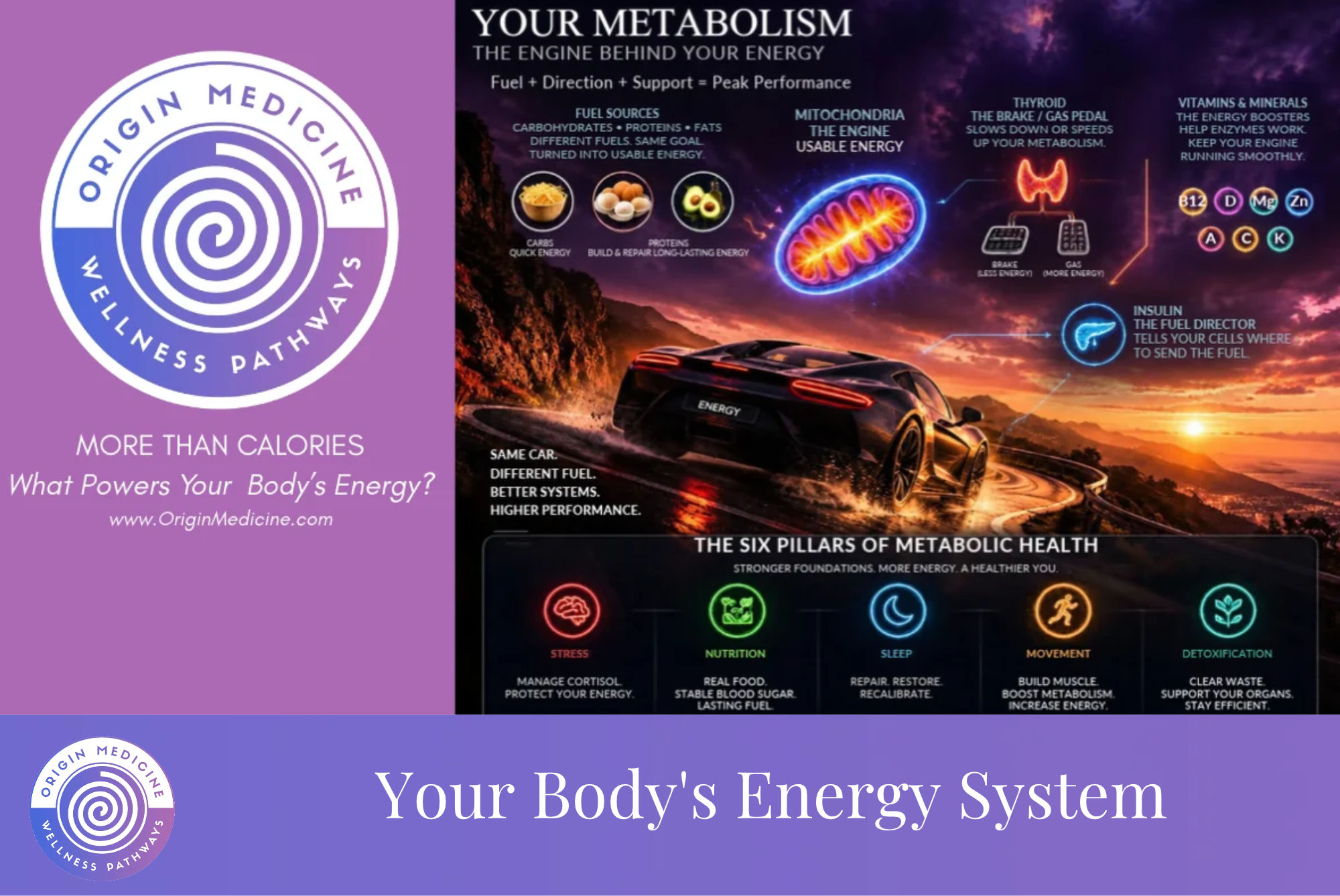
Think about a car climbing a hill. It needs fuel, an engine that can turn that fuel into motion, and controls that help it adjust its speed. The body has its own coordinated system, with each part doing a different job.
Fuel:
Carbohydrates and fats are familiar energy sources, and protein can also provide fuel. Protein is also the body’s repair kit: it supplies building blocks for tissues, enzymes, and other essential molecules.
Engine:
Mitochondria are a major part of the engine. Inside almost every cell are major structures called mitochondria. Think of them as tiny power stations: they help turn the food you eat and the oxygen your breathe into usable energy your body can put to work. That energy helps you do everyday things-walk, think, digest, repair, and even keep your heart beating. Your cells use it everyday. Mitochondria do more than just make energy, they also help cells respond to stress and carry out other important jobs.
Gas Pedal and Brake:
Thyroid hormones help set the pace. Think of the thyroid system as part of the gas pedal and brake of you car, with signals among the thyroid, brain, and pituitary helping regulate and adjust that pace.
Engine and Cellular Boosters:
Vitamins and minerals support enzymes and other biochemical processes. Plant compounds (phytonutrients) can also influence cellular signaling. They are not fuel; they act more like engine and cellular boosters, helping the body use fuel and carry out its work.
Fuel dispatcher:
Insulin helps coordinate how the body uses and stores fuel. After a meal, it helps move glucose from the bloodstream into cells. Some glucose is used for energy, while some is stored as glycogen in the liver and muscles. When the body has more energy than it needs right away, some surplus can be stored as fat. Insulin also slows the release of stored fat. Between meals, insulin levels generally fall, allowing the body to draw on stored fuel as needed.
…Now picture that car still struggling up the hill.
Pressing the gas harder or adding more fuel will not fix a sputtering engine. In the body, more food alone does not guarantee more usable energy when other parts of the system are under strain. And difficulty losing weight does not mean someone’s mitochondria are ultimately “broken.” While they can be downregulated poor nutrition, sleep, detoxification, movement, stress, inflammation signaling and metabolic flexibilty all matter.
Insulin resistance:
When the signal gets harder to hear…
Insulin is essential. After we eat, it helps cells take up glucose from the blood and helps the body manage energy. In insulin resistance, cells in the muscles, liver, or fat tissue respond less effectively to insulin—as if the fuel dispatcher’s message has become harder to hear. your pancreas may compensate by making more insulin. Over time, if it cannot keep up, blood sugar (glucose) can rise, metabolic flexibility becomes impaired and in turn, this increases the risk of type 2 diabetes and related complications.
Mitochondria, Stress, and Energy Demand
Mitochondria help cells meet changing energy demands throughout the day. They also take part in cell signaling and other metabolic processes. Inflammation, illness, aging, and other forms of strain can affect how cells produce and use energy. When the energy supply does not meet the work a tissue needs to do, the body may prioritize essential tasks and repair. Researchers are still working out when changes in mitochondrial function contribute to disease and when they result from it. These changes have been linked with metabolic and age-related chronic conditions, but they are only part of a larger picture.
Mitochondria matter to aging, but they do not act alone or replace the influence of genes. Aging reflects interactions among our genes, cellular systems, environment, and lived experiences. The quality of your mitochondria-is considered a hallmark of aging and improving the quality directly is promising, but that ideas taken alone it is not a reason to conclude that genes and lifestyle factors do not matter.
Pillars of Health
Nutrition: Choosing Fuel & Building Materials
The body needs a mix of nutrients to meet its energy needs, maintain tissues, and run biochemical processes such as turning food into energy, breaking down stored fat, building and repairing cells, making hormones and other substances and processing medication, toxins and clearing waste. Carbohydrates and fats can serve as fuel; protein supplies building blocks for muscles and other tissues, as well as enzymes and many essential molecules. The balance that works best varies with a person’s health, activity, preferences, and goals.
A pattern built around minimally processed foods can provide protein, fiber, essential fats, vitamins, minerals, and phytonutrients. Colorful vegetables, fruits, herbs, legumes, nuts, seeds, and other plant foods offer a range of compounds that support normal cellular processes. No single food acts as a cure or a magic fuel. The aim is a nourishing pattern that is sustainable and suited to the individual. It is recommended that you eat 9 or more colors of the rainbow daily from plants which may include legumes, fruits, vegetables and herbs & spices depending on your nutrition plan.
Movement: Asking the Engine to do Useful Work
Movement gives muscles a reason to use energy. Muscle contraction can help muscles take up glucose, and regular activity can support fitness, strength, insulin sensitivity, and the body’s ability to use different fuels. Walking, strength training, stretching, and ordinary movement through the day all contribute in different ways. If you are not sending your body the signal that it needs energy, it will downregulate your energy need by downregulating the amount of your mitochondria. At the same time, the goal is not to run the engine at full speed all the time which can be equally as damaging; the goal is to give the body regular, appropriate work and enough recovery to adapt in adequate but appropriate amounts. Too much of movement can be seen by the body as a stressor and create inflammation.
Detoxification: The Body’s Everyday Clearing Systems
The body already has systems that process and clear waste. The liver changes many substances so the body can use or remove them; the kidneys filter the blood and send many wastes out in urine; the digestive tract carries waste out in stool; and the lungs release carbon dioxide when we breathe out. The skin contributes to detoxification in a limited way: it acts as a protective barrier, and sweat carries out small amounts of certain substances. Good nutrition, adequate fluids, fiber, sleep, and avoiding unnecessary exposure to harmful substances can support these normal processes. “Detox” is often used to describe cleanses or products, but these are not the same as the liver and kidneys doing their everyday work, and a cleanse is not required to activate those organs. When the body becomes overloaded with too many enviromental toxins or the body’s processing and clearance pathways are impaired or overloaded, some compounds may persist longer and add to oxidative stress and inflammation. Over time, that stress can disrupt cellular signaling and strain mitochondria and other cells & tissues damaging them.
Sleep and Stress: Recovery Matters
Sleep is part of the body’s maintenance cycle. It supports brain function, hormone regulation, immune activity, and recovery from the demands of the day. Inadequate or disrupted sleep can affect appetite, energy, mood, and blood sugar regulation. Stress can raise the body’s demand for alertness and adaptation; when that demand continues, it can interfere with sleep and recovery.
Past experiences can shape how safe we feel in the present. Sometimes the nervous system keeps responding as though an old threat is nearby. The body can hold on to protective patterns long after a difficult experience has ended. Earlier experiences may affect trust or the ability to relax and perhaps our immune system directly.
A useful image for lingering stress is a smoke detector that has become extra sensitive and goes off easily—even when there is no “fire” or dangerous threat. The brain, stress-response system, sleep, and immune system all communicate with one another, so ongoing stress (both psychological and physiological) and disrupted sleep may influence immune activity.
Ongoing research suggests that the immune system can constantly be switched on and perhaps tied directly to stressful memories. A physiological state of stress and becoming hypervigilance when we become stressed may trigger the immune system. Brain and stress signals, along with disrupted sleep, can affect immune activity directly and may even be tied to a particular memory. In fact, some studies have found higher average inflammation markers in groups of people with post-traumatic stress disorder and even temporarily for 24-48 hours after a disagreement with a partner.
For people living with a chronic disease, an autoimmune condition, or a history of cancer, it is worth recognizing that stress-related events may be associated with triggering or worsening symptoms. The immune system’s state at the time of a traumatic—or even a joyful—event may also influence how the body responds and perhaps may even be retriggered from similar traumatic events due to immune imprinting on past memories.
Diseases are complex, and no single event explains or should be blamed for becoming ill. The hopeful side is that the reverse may also be true: a sense of purpose, supportive community, and overall well-being and contentment may help modulate immune activity. Addressing trauma and building supportive routines may improve overall well-being, even though they cannot guarantee a particular immune or disease outcome.
…A Whole-Person View
Energy, metabolism, immune activity, and emotional health are connected…
There is no single chain of events that explains every chronic disease, weight change, mood, or lifespan. Food provides fuel and building materials; Insulin helps direct fuel; Thyroid hormones help regulate pace; Mitochondria help produce usable energy; and vitamins, minerals and phytonutrients & the body’s stress load, normal waste-clearing systems and inflammation all contribute to the demands placed on that system and the support it receives.
Nourishing Food, Regular Movement, Restorative Sleep, Preventive Care, Stress Management, Managing Stress, Trauma Resolution, Supportive Relationships, Sense of Purpose, Spirituality & Community can all be practical ways to care for optimal health. They are not guarantees against illness, but they give us meaningful places to begin while research continues to clarify how these systems interact.